
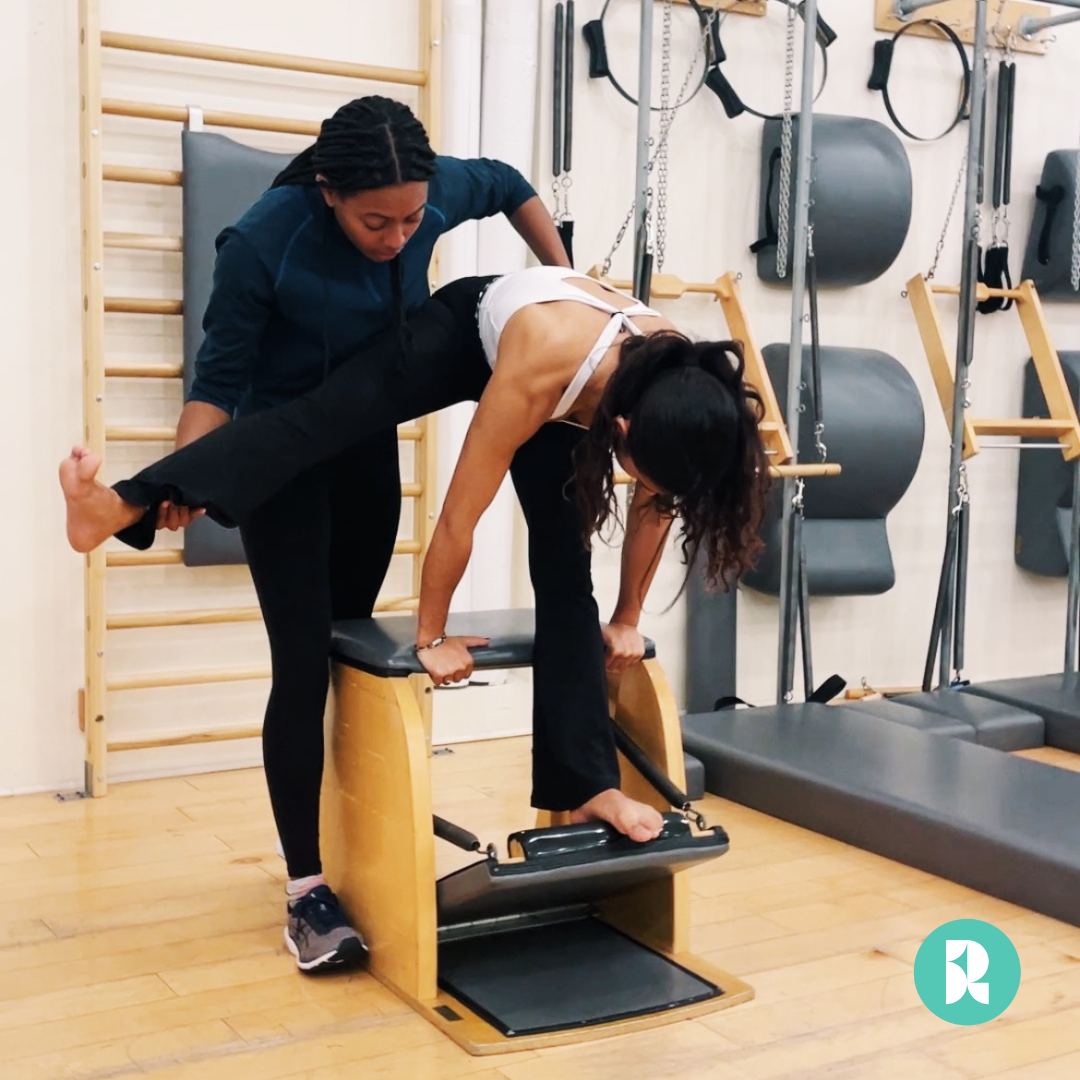
Photo by Real Pilates - All Rights Reserved
Dear Pilates Industry,
I've been feeling like there are things that should be said. Responses, rebukes, and realities.
I keep seeing defensive posts about the value or the lack thereof, in teaching Pilates across the full suite of equipment vs. just the Reformer or the Mat.
It usually sounds something like this:
“More equipment doesn't make you a better teacher."
Or....
"Reformer only teachers can be better than someone with Chairs and Barrels and all that".
I agree.
But I want to widen the frame, for both teachers and clients.
Because this conversation tends to collapse something nuanced into something quite binary.
Here's five points - off the top of my head.
I tend to use a lot of italics, bolds and underlines for effect. Bear with me.
First, it’s about results.
Yes, results come from how something is taught, not what room it’s in.
Yes, Mat and/or Reformer alone can deliver extraordinary outcomes when taught well.
Yes, intensity, volume, and intelligent progression matter more than shiny objects.
No argument there.
But Pilates wasn’t designed as a single-apparatus method. It was designed as a system. One that kept growing from the Mat through multiple pieces of equipment.
Agreeing that trainers can be excellent teaching on one apparatus - doesn’t require that we dismiss the system.
Are we really arguing that learning the Pull Up on the Wunda Chair won't help your Elephant on the Reformer get better? Or that Long Back Stretch on the Cadillac wouldn't improve the Long Back Stretch on the Reformer?
I know we aren't having that argument.
Second, access to more equipment means access to exercises that cannot be done on just one piece.
This isn’t about “more toys.” It’s about different relationships and also inclusion.
Some exercises, transitions, load patterns, and biomechanical patterns simply do not exist on the Mat or Reformer alone. The Cadillac, Chair, Barrels, and other small apparatus were not afterthoughts. They solve different movement problems and create different inputs.
That doesn’t make them superior.
It makes them specific.
Not all clients can lay down, for example.
I once had a client that had a diabetic retinopathy and couldn't recline past 45 degrees front...or back. Which brought us to the Cadillac and Chair. Where we worked for months.
Good luck trying to solve for that - with just a Reformer.
Third, more equipment can indicate more comprehensive training
Not always. But sometimes, yes.
A fully equipped studio often reflects advanced education and broader programming literacy. More tools require more discernment. More discernment requires more training.
For teachers, this expands your ability to meet people where they are.
For clients, it expands the menu of how progress can be achieved.
Not better. Not worse.
But definately more options.
Fourth, attention span matters (unfortunately)
This is the part no one loves to admit.
Early-stage clients (and sometimes long-term ones as well) often need variety to build the skill of attending. Different apparatuses provide different sensory experiences, which can help new movers stay engaged long enough to focus. Don't tell me in today's day and age that our attention span isn't operating at a deficit. Asking clients to focus on one apparatus is a strength we absolutely want to build - but it may take some time to get there. Variety can be a bridge to mastery.
Fifth and final - of course, it’s real.
And by real, I mean accurate.
Clients can choose to do a piece of Pilates or the whole thing. Both are valid. What matters is honesty about what’s being offered and clarity about what’s being taught.
Pilates has never required an all-or-nothing stance.
It should always require integrity.
In sum….
More equipment doesn’t guarantee better results.
But fewer tools don’t define proper Pilates either.
In this day of myriad fitness routines cosplaying as Pilates, it's more important than ever that we know what we're buying as consumers, and what we're selling as professionals.
Learn the work. Practice it. Teach it.
Rinse and repeat.
Happy New Year to all!