Pilates Is a System. So Is Herbal Medicine

Why I’ve Been Revisiting Adaptogens and What Tulsi Can Teach Us About Movement

Recently, I’ve found myself pulling old textbooks back off the shelf from my time pursuing a Master’s degree in Applied Clinical Nutrition. Somewhere between running studios, teaching teachers, traveling, and managing the pace of everyday life, I realized I missed that part of my brain. The quieter curiosity. The deep dive.

Long before wellness culture exploded into powders, tinctures, and protocols, I had a genuine interest in herbs, traditional medicines, inflammation, and the relationship between stress and the nervous system. Particularly how all of those things influence the way we feel in our bodies.

The more I revisit that material now, the more I realize how naturally it connects to Pilates.

One of the things I say often in the studio is that Pilates is not simply a collection of exercises. It is a system.

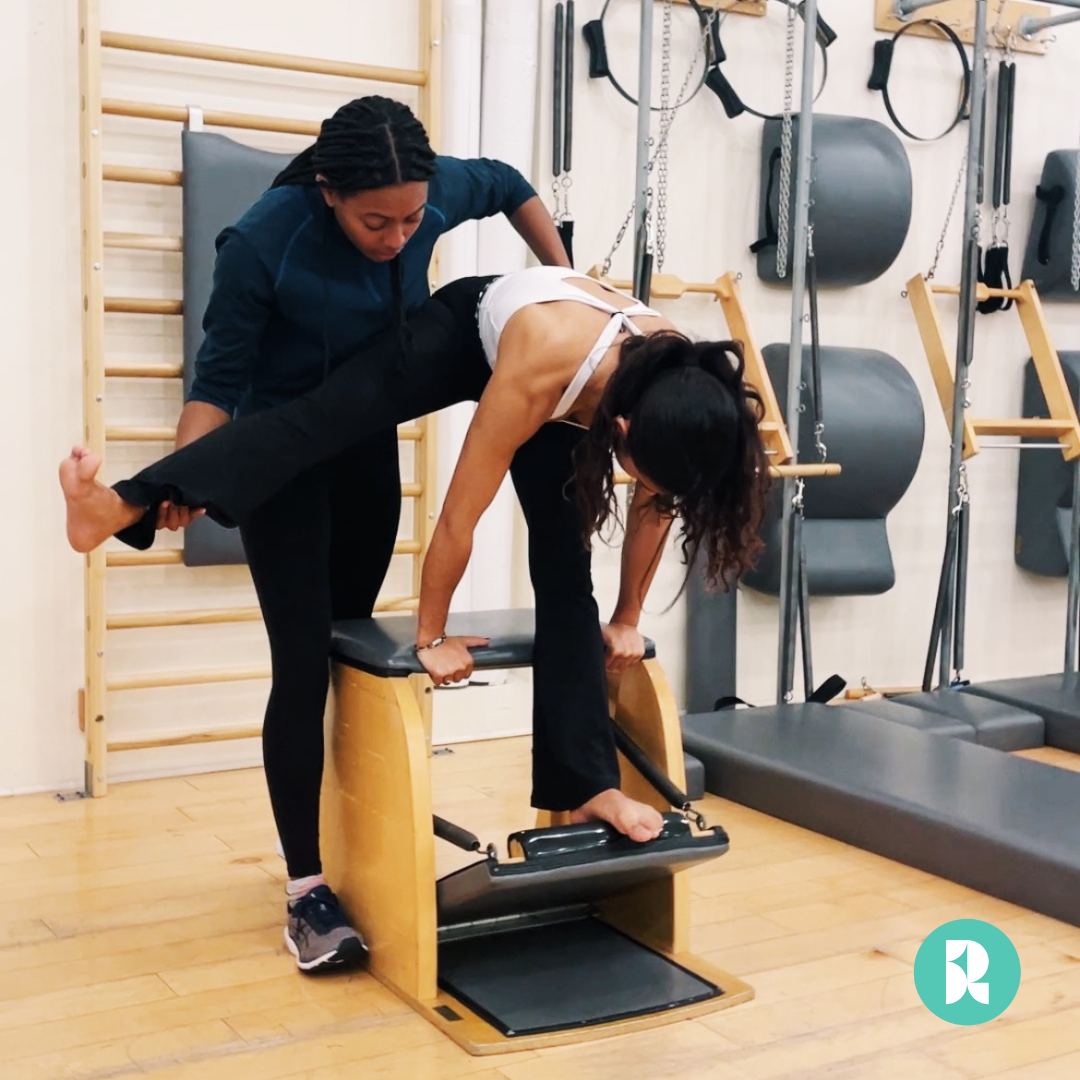
A movement introduced on the Mat may reappear on the Reformer in a completely different way. The Tower may clarify something the Mat exposed. The High Chair may challenge the same principle again from an upright position. Different apparatus. Different feedback. Same conversation.

Herbal medicine often works the same way.

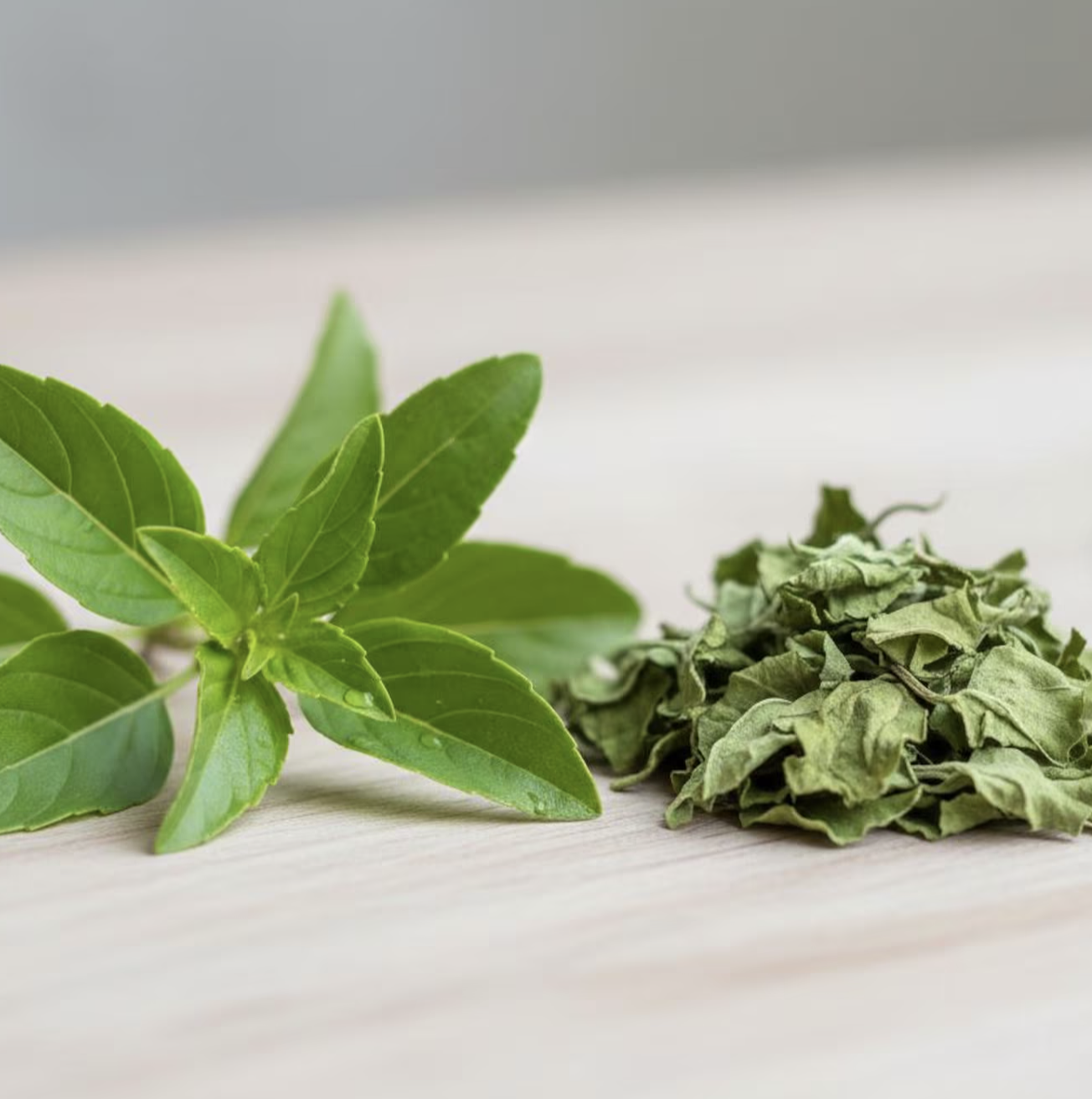
Take Tulsi, also known as holy basil, an adaptogenic herb traditionally used in Ayurvedic medicine and increasingly studied for its potential role in stress regulation and inflammatory support.

Different parts of the plant are used differently.

The Leaves are most commonly brewed into tea and tend to offer the gentlest and most approachable entry point for daily use. The Stems can be simmered longer into stronger decoctions with a deeper, earthier profile. The Seeds also appear in some traditional culinary and herbal preparations, though the leaves remain the most commonly used form.

Same plant. Different expression.

Very Pilates.

What fascinates me is that neither movement nor herbal medicine tends to work particularly well when reduced to a “hack.” Both rely on consistency and context. A relationship over time.

The body is constantly responding to load, stress, recovery, breath, sleep, environment, emotion. Nothing exists in isolation for very long.

And perhaps that’s why Pilates and adaptogens feel so aligned to me. Both are less interested in forcing the body and more interested in helping it become resilient.

I originally started revisiting adaptogens during a stretch of particularly long teaching days and travel, when I noticed my nervous system felt constantly “on.” What I appreciated about Tulsi was not that it made me tired, but that it seemed to take the edge off the constant feeling of acceleration. Subtle, but noticeable.

That distinction matters.

I wasn’t looking to sedate myself. I was looking for regulation.

As both a Pilates teacher and a physical therapist, I spend a lot of time thinking about the nervous system. We now understand that stress is not just emotional. It is physiological. Mechanical. Hormonal. Neurological. It affects inflammation, breathing patterns, muscle tension, sleep quality, digestion, pain perception, recovery.

Which is part of why the Pilates studio itself can feel so therapeutic to people.

The rhythm of the springs. The focus on breath. The demand for concentration. The transition from chaos into control.

You often leave feeling different because the nervous system itself has shifted state.

That doesn’t mean herbs are magic. And it certainly doesn’t mean every supplement belongs in every body.

But I do think there is value in supporting the system from multiple directions.

Movement. Nutrition. Sleep. Stress management. Breath. Recovery.

Not isolated fixes. A relationship.

In many ways, this is what I think of as original medicine. Before everything became optimized, branded, biohacked, and packaged into trends, there was rhythm. Daily practice. Plants. Movement. Rest. Breath. Community. Systems that worked with the body instead of constantly trying to override it.

Pilates has always felt that way to me too.

Lately, I’ve been enjoying a simple Tulsi tea ritual after long teaching days.

Simple Tulsi Tea

  • 1–2 Tsp Dried Tulsi Leaves Or 1 Tea Bag

  • Fresh Ginger Slices

  • Hot Water

  • Squeeze Of Lemon

  • Optional Honey

Steep for about 5–10 minutes.

The flavor is slightly peppery, earthy, and grounding without feeling heavy.

Where To Find It

I generally recommend looking for:

  • Organic Tulsi Leaf Tea

  • Loose Leaf Or Simple Ingredient Blends

  • Reputable Companies With Transparent Sourcing

Organic India and Traditional Medicinals are both widely available starting points and easy to find online or in health food stores.

And because wellness conversations online often skip this part entirely, it’s equally important to talk about when adaptogens may not be appropriate.

Tulsi may not be ideal for everyone, particularly individuals who:

  • Are Pregnant Or Breastfeeding

  • Take Blood Thinners

  • Take Medications Affecting Blood Sugar

  • Have Upcoming Surgery

  • Have Significant Endocrine Or Hormonal Conditions

  • Have Thyroid Conditions

  • Have Known Allergies To Basil-Family Plants

Herbs are biologically active substances. “Natural” is not the same thing as universally safe.

As always, this is educational information, not medical advice, and individualized guidance matters.

The more years I spend teaching movement, the more convinced I become that the body responds best to systems rather than extremes. Small consistent inputs. Intelligent loading. Rhythmic practices. Things that support adaptability instead of pushing us deeper into depletion.

Turns out Joseph Pilates and many traditional healing systems may have understood something similar all along.

Different apparatus. Different preparations. Same philosophy.

~Alycea Ungaro
Founder, Real Pilates®

Pilates Is a Method. So Is Recovery

Why Ashwagandha Keeps Coming Up In Conversations About Stress, Strength, and Resilience

As I’ve been revisiting old nutrition textbooks and research from my graduate work in Applied Clinical Nutrition, one thing has become very clear to me. We are living in a state of chronic acceleration.

People are tired, but overstimulated. Wired, but depleted. Strong in some places and completely dysregulated in others.

Honestly, I see versions of this every day in the studio.

Tight necks. Shallow breathing. Difficulty focusing. Trouble recovering. Nervous systems that no longer seem to know the difference between stress and normal life.

Which is part of why I’ve found myself revisiting conversations around adaptogens, particularly Ashwagandha.

Ashwagandha is an herb traditionally used in Ayurvedic medicine and often associated with stress resilience, recovery, sleep support, and nervous system regulation. Unlike stimulants that tend to push the system harder, adaptogens are generally thought to help the body adapt to stress more efficiently.

That idea feels very aligned with Pilates to me.

Because the Pilates system, when practiced well, is not about depletion. It is not about annihilating the body into submission. It is about creating capacity.

Capacity to breathe better. Recover better. Move better. Handle stress better.

The older I get, the more I think real health may depend less on intensity and more on adaptability.

That’s where Ashwagandha becomes interesting.

Traditionally, the Root is the most commonly used part of the plant and the source of most modern supplements and powders. It tends to be associated with stress modulation and recovery support. The Leaves exist in traditional preparations as well, though they are less commonly used in mainstream wellness products and can behave differently biologically.

Same plant. Different application.

Very Pilates.

One apparatus may challenge stability while another builds mobility. One exercise may energize the system while another downregulates it. The method adapts based on what the body needs.

Herbal medicine often works similarly.

I first started paying closer attention to Ashwagandha during periods where my schedule felt relentless. Long teaching days. Travel. Decision fatigue. That feeling where your body is exhausted but your brain refuses to power down.

What interested me was not the promise of “calm.” Honestly, I distrust wellness language that sounds too absolute.

What I appreciated was the possibility of feeling more steady.

More buffered.

Less reactive.

Subtle, but meaningful.

As both a Pilates teacher and physical therapist, I think we dramatically underestimate how much chronic stress shapes the physical body. Stress changes breathing patterns. Muscle tone. Recovery. Sleep quality. Pain perception. Coordination. Even posture.

You can often see it the moment someone walks into the room.

And this is where I think movement and recovery practices belong in the same conversation. The Pilates studio itself can become a form of nervous system training.

The rhythm of springs. Repetitive movement. Breath patterns. Focus. Precision.

The body starts to organize itself differently.

Not because we forced it, but because we created an environment where it could regulate.

That does not mean Ashwagandha is appropriate for everyone, and it certainly does not mean supplements replace fundamentals like movement, sleep, nutrition, or medical care.

But I do think there is something valuable about remembering what I’ve started thinking of as original medicine.

Not optimization.

Not endless stimulation.

Not another productivity tool disguised as wellness.

Just consistent practices that support the body’s ability to adapt.

Movement. Breath. Plants. Rhythm. Recovery.

Simple things that humans have relied on for a very long time.

One Simple Way I Use It

I tend to prefer Ashwagandha in simpler forms rather than highly engineered blends.

Some people use:

  • Powder Mixed Into Warm Milk Or Tea

  • Capsules From Reputable Supplement Companies

  • Evening Tonics With Cinnamon Or Ginger

Personally, I lean toward evening use rather than daytime use, especially during periods of high stress or travel.

Where To Find It

I generally recommend looking for:

  • Reputable Third-Party Tested Brands

  • Straightforward Ingredient Lists

  • Transparent Sourcing

Thorne, which we already recommend in the studio, offers Ashwagandha formulations, and companies like Organic India also produce traditional preparations and teas.

When Ashwagandha May Not Be Appropriate

Ashwagandha is biologically active and should not be treated casually simply because it is “natural.”

Individuals should speak with a qualified healthcare provider before using it regularly, especially if they:

  • Are Pregnant Or Breastfeeding

  • Have Autoimmune Conditions

  • Have Hyperthyroidism Or Thyroid Disorders

  • Take Sedatives Or Anti-Anxiety Medications

  • Take Blood Pressure Or Blood Sugar Medications

  • Have Upcoming Surgery

  • Have Hormone-Sensitive Conditions

As always, this is educational information, not medical advice, and individualized guidance matters.

The more years I spend inside both movement and nutrition, the more convinced I become that the body responds best to thoughtful systems rather than extremes.

Pilates has always understood that.

Different apparatus. Different strategies. Same philosophy.

Build resilience. Reduce unnecessary stress. Support the body as a whole.

Dear Pilates Industry......

Photo by Real Pilates - All Rights Reserved

Dear Pilates Industry,

I've been feeling like there are things that should be said. Responses, rebukes, and realities.

I keep seeing defensive posts about the value or the lack thereof, in teaching Pilates across the full suite of equipment vs. just the Reformer or the Mat.
It usually sounds something like this:

“More equipment doesn't make you a better teacher." 
Or....
"Reformer only teachers can be better than someone with Chairs and Barrels and all that".

I agree.
But I want to widen the frame, for both teachers and clients.

Because this conversation tends to collapse something nuanced into something quite binary.
Here's five points - off the top of my head.
I tend to use a lot of italics, bolds and underlines for effect. Bear with me.

First, it’s about results.

Yes, results come from how something is taught, not what room it’s in.
Yes, Mat and/or Reformer alone can deliver extraordinary outcomes when taught well.
Yes, intensity, volume, and intelligent progression matter more than shiny objects.

No argument there.

But Pilates wasn’t designed as a single-apparatus method. It was designed as a system. One that kept growing from the Mat through multiple pieces of equipment.

Agreeing that trainers can be excellent teaching on one apparatus - doesn’t require that we dismiss the system.
Are we really arguing that learning the Pull Up on the Wunda Chair won't help your Elephant on the Reformer get better? Or that Long Back Stretch on the Cadillac wouldn't improve the Long Back Stretch on the Reformer?
I know we aren't having that argument.

Second, access to more equipment means access to exercises that cannot be done on just one piece.

This isn’t about “more toys.” It’s about different relationships and also inclusion.

Some exercises, transitions, load patterns, and biomechanical patterns simply do not exist on the Mat or Reformer alone. The Cadillac, Chair, Barrels, and other small apparatus were not afterthoughts. They solve different movement problems and create different inputs. 

That doesn’t make them superior.
It makes them specific.
Not all clients can lay down, for example.
I once had a client that had a diabetic retinopathy and couldn't recline past 45 degrees front...or back. Which brought us to the Cadillac and Chair. Where we worked for months.
Good luck trying to solve for that - with just a Reformer.

Third, more equipment can indicate more comprehensive training

Not always. But sometimes, yes.

A fully equipped studio often reflects advanced education and broader programming literacy. More tools require more discernment. More discernment requires more training.

For teachers, this expands your ability to meet people where they are.
For clients, it expands the menu of how progress can be achieved.

Not better. Not worse.
But definately more options.

Fourth, attention span matters (unfortunately)

This is the part no one loves to admit.

Early-stage clients (and sometimes long-term ones as well) often need variety to build the skill of attending. Different apparatuses provide different sensory experiences, which can help new movers stay engaged long enough to focus. Don't tell me in today's day and age that our attention span isn't operating at a deficit. Asking clients to focus on one apparatus is a strength we absolutely want to build - but it may take some time to get there.  Variety can be a bridge to mastery.

Fifth and final - of course, it’s real.

And by real, I mean accurate.

Clients can choose to do a piece of Pilates or the whole thing. Both are valid. What matters is honesty about what’s being offered and clarity about what’s being taught.

Pilates has never required an all-or-nothing stance.
It should always require integrity.

In sum….

More equipment doesn’t guarantee better results.
But fewer tools don’t define proper Pilates either.
In this day of myriad fitness routines cosplaying as Pilates, it's more important than ever that we know what we're buying as consumers, and what we're selling as professionals. 

Learn the work. Practice it. Teach it.
Rinse and repeat.
Happy New Year to all!

Perimenopause, Pilates, and Graceful Transitions

Why More Women Are Telling US Their Bodies Feel Different

Lately, more and more conversations in the studio seem to begin the same way.

“I don’t know what’s happening, but my body feels different.”

Women who have always felt strong suddenly feel less steady. Recovery changes. Sleep changes. Heat tolerance changes. Workouts that once felt energizing now feel strangely draining. Sometimes strength is still there, but endurance feels different. Coordination feels different. Even motivation feels different.

Many assume they’re doing something wrong.

Usually, they aren’t.

They’re in transition.

Years ago, women often referred to this phase simply as “the change.” There was something almost elegant about that phrase, even if the experience itself often felt anything but graceful. Women were expected to move through an enormous physiological shift quietly, often without much guidance or support.

Thankfully, we talk more openly about perimenopause now. But I still think many women are surprised by how deeply this transition can affect not only hormones, but the nervous system, sleep, recovery, mood, inflammation, and the way movement itself feels inside the body.

As both a Pilates teacher and physical therapist, I find myself thinking often about the word transition lately.

In Pilates, transitions are never meant to feel abrupt or chaotic. The movement between exercises matters just as much as the exercise itself. There is an effort to create continuity, rhythm, organization, and flow even while the body changes position or direction.

Honestly, I think this stage of life deserves the same approach.

Not panic.
Not punishment.
Not fighting the body.

Support.

Adaptation.

A little more grace.

And perhaps that’s part of why I’ve found myself revisiting herbs traditionally associated with women’s health and hormonal transitions, particularly Shatavari, an Ayurvedic herb long used as a restorative tonic during periods of depletion and change.

What I appreciate about traditional herbal systems is that they tend to respect the body as a living system rather than a collection of isolated symptoms. They often focus on resilience, nourishment, recovery, and adaptability, ideas that feel deeply aligned with Pilates to me.

Because at its best, Pilates is not about overpowering the body. It is about supporting it intelligently through different seasons and different demands.

Sometimes that means building strength.

Sometimes it means improving recovery.

Sometimes it simply means creating an environment where the nervous system can exhale a little.

I think many women in perimenopause are searching for exactly that.

Not necessarily to feel younger.

Not necessarily to “optimize.”

Just to feel more like themselves again.

Lately, I’ve been enjoying a warm evening drink with powdered Shatavari, particularly during stretches of long teaching days, travel, or periods where my system feels overstimulated.

Simple. Grounding. Restorative.

I usually mix:

  • Warm Milk Or Almond Milk

  • 1/2 Tsp Shatavari Powder

  • Cinnamon

  • Fresh Ginger

  • Optional Honey

The flavor is mild and earthy, especially comforting in colder months or at the end of a long day.

Where To Find It

I generally recommend:

  • Reputable Ayurvedic Companies

  • Organic Sources

  • Simple Ingredient Lists

  • Third-Party Tested Products When Possible

Organic India and Banyan Botanicals are common starting points for traditional Ayurvedic herbs and preparations.

When Shatavari May Not Be Appropriate

As with any herb, “natural” does not automatically mean universally safe.

Shatavari may not be appropriate for individuals who:

  • Are Pregnant Or Breastfeeding Without Medical Guidance

  • Have Hormone-Sensitive Conditions

  • Have Significant Estrogen-Related Concerns

  • Take Certain Diuretics Or Medications Affecting Fluid Balance

  • Have Allergies To Asparagus Family Plants

As always, this is educational information, not medical advice, and individualized guidance matters.

The more years I spend inside movement, rehabilitation, and nutrition, the more convinced I become that the body responds best to support rather than force.

Not extremes.

Not endless intensity.

Systems.

And perhaps that’s why Pilates remains so relevant during periods of transition. It reminds us that change itself does not have to be abrupt to be powerful.

~Alycea Ungaro
Founder, Real Pilates®
A FIRST - The Pilates Punch Card (30th Series)

My local iced coffee haunt recently offered me a punch card.

I declined - because I have at least 4, maybe 5 floating around various coat pockets and purses. That’s the thing about punch cards.

In the mid 1990’s when I was a young studio owner trying to figure out how to move my business out of my home and into a commercial space named “Tribeca Bodyworks” - I immediately landed on punch cards to track client’s attendance and purchases.

Someone advised me early on - not to give the clients the punch cards in case they lost them. I want to tell my coffee shop that but the sheer scale of coffee customers would make that impractical. Regardless, we took that advice and kept the cards in house, punching as they progressed and marking the dates.

Over time we moved to simpler cards that just listed the dates.
And then one day the word “software” entered our little studio lurching us away from our pen and paper schedule book and our simple class “cards”.

The truth is no matter how digital we become - there will always be a place for the punch card in our lives. It’s ubiquitous.

Now if I can just find my coffee shop one.

A FIRST - Origin of a Logo (30th Series)

The flowers were one of the most magical things at my wedding. Pink and white roses with splashes of green in short vases adorned the tables. My bouquet was short also. Nearly all white with a whiff of pink and some baby's breath. But the show-stealer was my bracelet. The tiniest rosebuds invisibly threaded together into a living wrist ornamental. Everyone commented on it and it was my last focal point just before I walked down the aisle.

The designer, as it turned out, was a dear family friend of my soon-to-be mother-in-law. Mel Furukawa began as an artist and illustrator before moving into floral design after studying the craft in Japan. It wasn't long before his impeccable eye made him the floral designer of choice for all the top restaurants in the New York area. Mel's designs were singular. It was 1995 when he gifted us the exquisite wedding flowers and my special bracelet. 

The very next year in 1996 I moved my home studio into a commercial space in Tribeca. 

We became a business. We had a name, and we had a business certificate.

We had policies and class cards and a schedule book. And we had an employee to boot.

But we didn't have a brand. Or the idea of a brand - we didn't have a logo or an image or a typeface.

And without those things I couldn't hang a shingle on the street and let our Tribeca neighborhood know that we had arrived.

Logos and original art were still something you had to source live in 1995 so when I realized I would need to hire an artist - I thought immediately of Mel.

It took a few weeks but in the end he created a simple swirl that embodied all I wanted to say about springs and centering and movement. The rougher edges symbolizing the harshness of the metal springs were balanced by the smoothness of the spiral alluding to the movement quality embodied in every Pilates session. The spiral, to my mind, was the inward focus of Pilates but also the trajectory of wellness that your Pilates practice would inspire. A journey that began internally but steadily expanded outwards.

I like to think that spiral pushed me upward and outward from our early first studio to our current international operation. Our first logo was proudly displayed at our first studio and became the official calling card of what would eventually become Real Pilates.

So much gratitude for our dear friend Mel Furukawa. The original logo is long gone but the deep teal color is still part of our identity all these years later.

Tribeca Bodyworks  Logo - Mel Furukawa

A FIRST - A Manual is Born

In 2001 my first business, Tribeca Bodyworks re-branded as the Pilates Center of New York. The transition was short-lived on our way to our ultimate name - Real Pilates®. But 2001 was special for another reason beyond our name change. It was the year we conducted our very first teacher training program.

The decision to train teachers was borne out of necessity. We had been auditioning teachers for a while and I was dissatisfied with the caliber of candidates. In the wake of a disappointing interview, we determined that we could take this process in house and become a bona fide education center.

But first, we needed a manual. 

Our early photo shoot models included some Pilates luminaries you may have heard of including Peter Fiasca, Junghee Won and Tiziana Trovati. To me, they were my Pilates pals. Once the casting was done and scheduled, I grabbed my very clunky camera and set about taking pictures. Honestly - that was the easy part.

Several weeks and hundreds of freeze frames later, I set about writing the very first manual. I had no idea what I was taking on. It took literally months to go through every single thing I wanted to write about every single exercise but there was no option other than to plod through page after page - hour after hour.

When I felt that I had taken it as far as I could, I sought out an editor.

Not just any editor - but someone I could trust to look at this enormous binder of hundreds of exercises with a keen eye and the wisdom to match.

My colleague, the late Bob Liekens generously offered his talents. He was the ideal blend of precision and brevity. What followed was a whirlwind of edits and phone calls and meetings. And then one day, we found ourselves finishing up the very last pages.

Bob continued his work with me during the initial program launch. He led that very first group of trainees through their seminars so I could learn the lay of the land but also run through the manual in real time for further edits.  By the end of the seminars we had accomplished three rounds of edits from the first draft.

Our manual has evolved in myriad ways since then but it still represents a collective wisdom. Joe Pilates passed it on to Romana who passed it down to myself and to Bob and onto the next generation. The first four trainees made their way into the world and taught Pilates for years to come. Some are still at it today.

Our teacher training took a break after that. I needed time and energy to raise my two girls and that first cycle taught me just how much effort it would take to train teachers properly. It was 2013 when I took our manual down off the shelf, dusted it off and got back to work.

There are so many Pilates colleagues who have touched and influenced our program but looking back at our inception, besides Romana herself, Bob Liekens was the greatest contributor.

Today our Lead Trainer team is comprised of several teachers trained directly by Bob. They bring his spirit each day to our training. And of course, his words are embedded in our materials.

In gratitude for Bob and all who he touched.

~Alycea

Original Real Pilates Manual Edits - Bob Liekens

Original RPTT Manual with Bob Liekens Edits

A FIRST - Lights, Camera....Scoop!

Clain diPalma in a TV spot filmed at Tribeca Bodyworks

The phone rang…and I picked up quickly chirping “hello?” reflexively- before quickly correctng myself. “Tribeca Bodyworks, can I help you?”

An hour earlier the phone company had packed up and left me with a brand new phone line. I had moved out of my apartment and into our commercial space and we were almost ready.

My answering service (a relic of the old days) was forwarded to the new line effective that day.

The only wrinkle? I didn’t have a phone. A physical phone - so once the phone company left - I went out to buy one.

The walls of my 1st studio were cinder block. The studio had a distinctly industrial feel and the outlet was placed squarely at baseboard height although there were no baseboards. The cold of the wall was evident when I managed to get the phone wire plugged into the jack.

And that is the exact moment - that the phone rang.

Once I recovered my composure the voice on the other line took over. A woman introduced herself and explain succinctly that she was from a cable network show and had been referred to me because they wanted to film a segment about Pilates.

I pivoted my gaze slowly around the room, taking in the reality. The walls had been painted. The indoor/outdoor carpet was scheduled. There were no mirrors. There was no equipment. It was not yet a Pilates studio.

“When did you want to film?” I queried.

The answer was what I had hoped to hear. “Two weeks”.

“Perfect”, I replied.

The shoot happened. It was the first of many. I wonder sometimes if the phone company hadn’t shown up that day on time or even if I’d missed the call.

Would the rest have happened?

We’ll never really know!

——————————

These images is a still captured from the VHS video. Pilates colleagues at the time, Caron Bosler and the late Clain Thomson DiPalma, were both featured.

Caron Bosler in an early TV spot for Real Pilates - (then Tribeca Bodyworks)

A FIRST - PILATES PACKING LIST (30th Series)

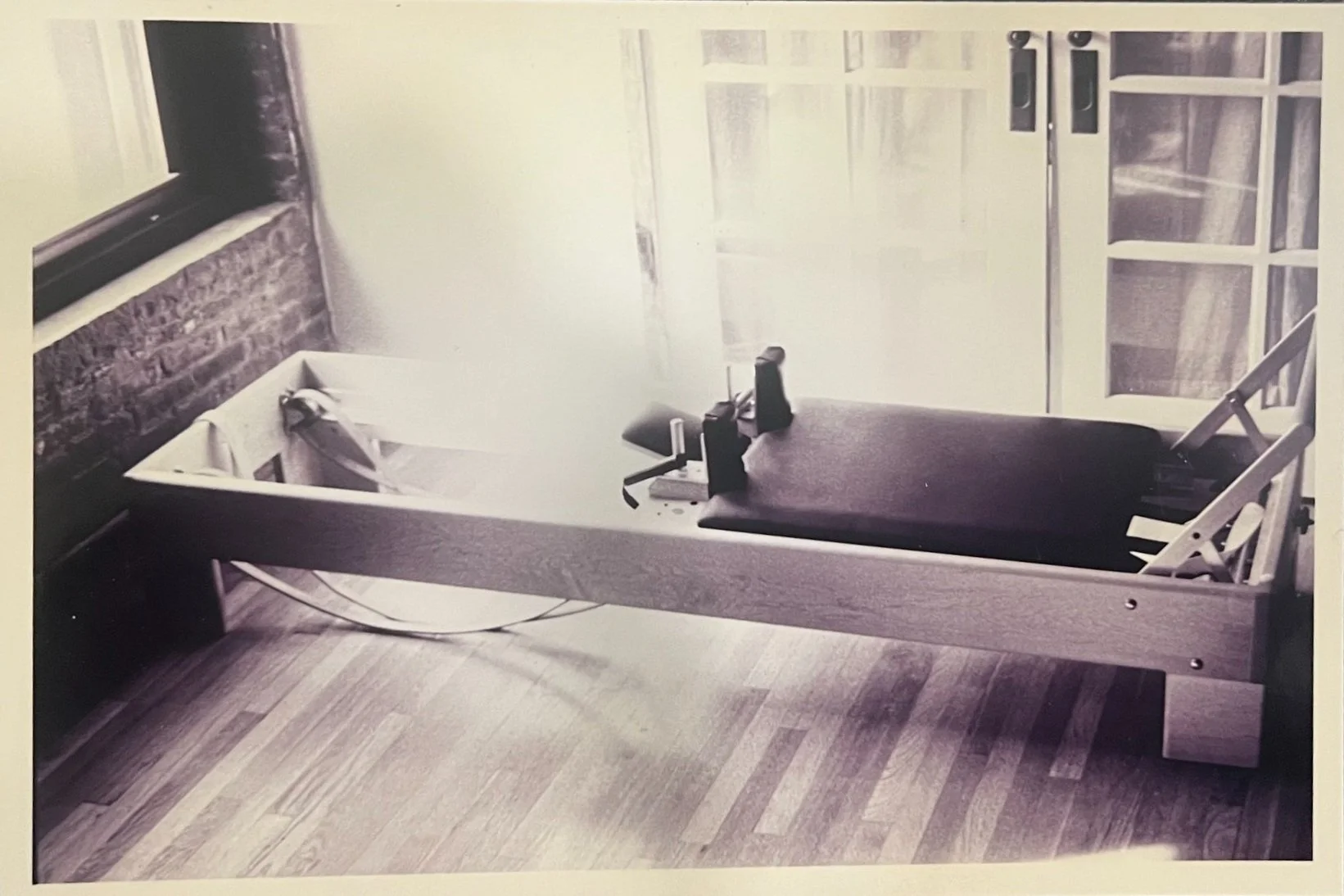
The Very First Reformer….ever.

Well, not ever. But the first “real” Reformer in my world. Here’s how it went.

The voice on the other line was calmly asking for my credit card. With a quiver in my voice and a trembling hand I slowly read all the numbers off my Visa card. 

This was the largest purchase I had ever made. It was 1995 and the wooden Reformer with Black upholstery and curbside delivery was just about $2500.

I hung up the phone. Put my head in my hands. And quietly lamented… “what am I doing?

Two months later I had a bright and shiny Reformer in the middle of my Tribeca living room. 
What came next, was not at all what I expected!

The french doors in the photo shown here were doors to the Master bedroom. Typically the Reformer lived across the room but on this day we wanted to capture the light. It would be another 12 years before the first iphone came out.

I remember so many details - I did not however, remember, that the handles on this Reformer were not leather or metal …but black nylon and plastic. Such a strange detail to forget. I can’t imagine not having upgraded to better handles but the photos don’t lie.

~Alycea

My 1st home studio Reformer was from Balanced Body - 4 springs with leather straps in black upholstery.

A FIRST - NO WAY AROUND IT (30th Series)

HAPPY NEW YEAR! We are turning 30 this year. So it felt right to share where we came from and how we started. Buckle up for our Real Pilates Time Capsule! Watch for regular posts and stay connected to our Real Family!

~Alycea Ungaro
—————————————————
It was 1992 when I first stepped foot inside Drago's Gym to meet with Joseph Pilates protege' and ask for permission to train as a Pilates instructor. I was instructed to have a seat on a plush circular couch on the 6th floor at 50 West 57th Street. I was nervous but excited to speak with the Grande Dame herself. My prior instructor Steve Giordano had sent me here and I felt confident that I had a good chance of getting the approval I sought. 

Romana whisked in and took a seat asking brusquely who had sent me. Once my training had been established, she stood up and walked away. I felt my confidence receding. A minute or so passed before she returned with a piece of colored folded cardstock . Her outstretched hand instructed me to take it. It was a list of exercises. A long list. I recognized some but not all. 

"Come back tomorrow at 7am. You'll teach this Mat."

It was 1pm.

I didn't know my schedule but I knew enough not to push back. 

Still, I faltered a moment. "Teach the whole list"? I queried? 

Romana replied with words I have never forgotten - "There's no way around it Alycea, you have to memorize it."

It's been more than 30 years since that moment. I wonder sometimes where I would be if I hadn't shown up that next day. But I did. And Romana was right. 

There was no way around it. 

The Mat I had to teach on my first day - before I was even accepted as an Apprentice!

A FIRST - Hiring our First Instructor (30th Series)

In 1995 I applied to go to school for Physical Therapy.

I was lucky enough to be accepted to NYU and my immediate reaction after jumping up and down with excitement was to worry what on earth would happen to my home practice and all my clients.

The way I saw it - I had two choices. I could find someone to teach with me inside my home and run the studio from my apartment with teachers who would be available when I was not. Or I could look for a commercial space. I opted for both.

The plan was to hire someone to help while I was still in my home. The clients would meet and work with someone new. And by the time we migrated to a studio space we would be all set up for clients to work with more than one instructor.

Finding teachers in 1996 was tough. But I got lucky! A graduating apprentice answered the call and it wasn’t long before my one instructor business doubled in size to two instructors.

Angeline grew with the business and right out and over to our brand new space. Having her teaching next to me was the beginning of my education on team collaboration and how studio dynamics and culture are developed. Shortly before we took our physical space I hired a 2nd teacher. The studio grew and flourished and in August of 1996, I grabbed my backpack and started my first day of classes knowing the business was in qualified hands.

If not for those early instructors - Real Pilates would have looked very different today. I’m not even sure we’d exist. But just like that - it’s been a 30 year ride.

Front Row:Alycea Ungaro, Second Row: Kara Springer, Angeline Shaka, Gina Papalia, Back Row: Kathy Buccelato, Alison Thiem, Gabrielle Gregory, Diane Lam