
Why I’ve Been Revisiting Adaptogens and What Tulsi Can Teach Us About Movement
Recently, I’ve found myself pulling old textbooks back off the shelf from my time pursuing a Master’s degree in Applied Clinical Nutrition. Somewhere between running studios, teaching teachers, traveling, and managing the pace of everyday life, I realized I missed that part of my brain. The quieter curiosity. The deep dive.
Long before wellness culture exploded into powders, tinctures, and protocols, I had a genuine interest in herbs, traditional medicines, inflammation, and the relationship between stress and the nervous system. Particularly how all of those things influence the way we feel in our bodies.
The more I revisit that material now, the more I realize how naturally it connects to Pilates.
One of the things I say often in the studio is that Pilates is not simply a collection of exercises. It is a system.
A movement introduced on the Mat may reappear on the Reformer in a completely different way. The Tower may clarify something the Mat exposed. The High Chair may challenge the same principle again from an upright position. Different apparatus. Different feedback. Same conversation.
Herbal medicine often works the same way.
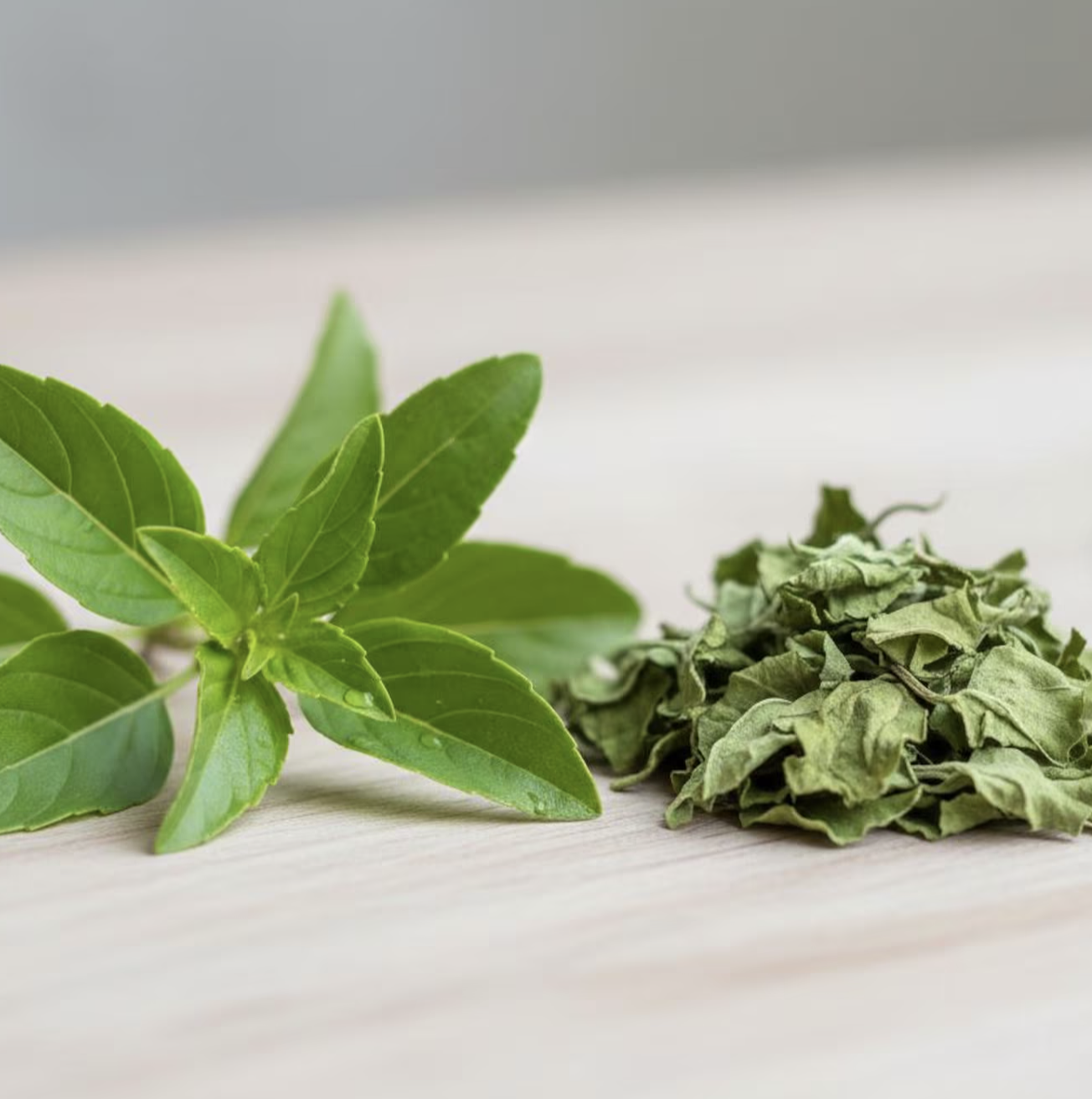
Take Tulsi, also known as holy basil, an adaptogenic herb traditionally used in Ayurvedic medicine and increasingly studied for its potential role in stress regulation and inflammatory support.
Different parts of the plant are used differently.
The Leaves are most commonly brewed into tea and tend to offer the gentlest and most approachable entry point for daily use. The Stems can be simmered longer into stronger decoctions with a deeper, earthier profile. The Seeds also appear in some traditional culinary and herbal preparations, though the leaves remain the most commonly used form.
Same plant. Different expression.
Very Pilates.
What fascinates me is that neither movement nor herbal medicine tends to work particularly well when reduced to a “hack.” Both rely on consistency and context. A relationship over time.
The body is constantly responding to load, stress, recovery, breath, sleep, environment, emotion. Nothing exists in isolation for very long.
And perhaps that’s why Pilates and adaptogens feel so aligned to me. Both are less interested in forcing the body and more interested in helping it become resilient.
I originally started revisiting adaptogens during a stretch of particularly long teaching days and travel, when I noticed my nervous system felt constantly “on.” What I appreciated about Tulsi was not that it made me tired, but that it seemed to take the edge off the constant feeling of acceleration. Subtle, but noticeable.
That distinction matters.
I wasn’t looking to sedate myself. I was looking for regulation.
As both a Pilates teacher and a physical therapist, I spend a lot of time thinking about the nervous system. We now understand that stress is not just emotional. It is physiological. Mechanical. Hormonal. Neurological. It affects inflammation, breathing patterns, muscle tension, sleep quality, digestion, pain perception, recovery.
Which is part of why the Pilates studio itself can feel so therapeutic to people.
The rhythm of the springs. The focus on breath. The demand for concentration. The transition from chaos into control.
You often leave feeling different because the nervous system itself has shifted state.
That doesn’t mean herbs are magic. And it certainly doesn’t mean every supplement belongs in every body.
But I do think there is value in supporting the system from multiple directions.
Movement. Nutrition. Sleep. Stress management. Breath. Recovery.
Not isolated fixes. A relationship.
In many ways, this is what I think of as original medicine. Before everything became optimized, branded, biohacked, and packaged into trends, there was rhythm. Daily practice. Plants. Movement. Rest. Breath. Community. Systems that worked with the body instead of constantly trying to override it.
Pilates has always felt that way to me too.
Lately, I’ve been enjoying a simple Tulsi tea ritual after long teaching days.
Simple Tulsi Tea
1–2 Tsp Dried Tulsi Leaves Or 1 Tea Bag
Fresh Ginger Slices
Hot Water
Squeeze Of Lemon
Optional Honey
Steep for about 5–10 minutes.
The flavor is slightly peppery, earthy, and grounding without feeling heavy.
Where To Find It
I generally recommend looking for:
Organic Tulsi Leaf Tea
Loose Leaf Or Simple Ingredient Blends
Reputable Companies With Transparent Sourcing
Organic India and Traditional Medicinals are both widely available starting points and easy to find online or in health food stores.
And because wellness conversations online often skip this part entirely, it’s equally important to talk about when adaptogens may not be appropriate.
Tulsi may not be ideal for everyone, particularly individuals who:
Are Pregnant Or Breastfeeding
Take Blood Thinners
Take Medications Affecting Blood Sugar
Have Upcoming Surgery
Have Significant Endocrine Or Hormonal Conditions
Have Thyroid Conditions
Have Known Allergies To Basil-Family Plants
Herbs are biologically active substances. “Natural” is not the same thing as universally safe.
As always, this is educational information, not medical advice, and individualized guidance matters.
The more years I spend teaching movement, the more convinced I become that the body responds best to systems rather than extremes. Small consistent inputs. Intelligent loading. Rhythmic practices. Things that support adaptability instead of pushing us deeper into depletion.
Turns out Joseph Pilates and many traditional healing systems may have understood something similar all along.
Different apparatus. Different preparations. Same philosophy.
~Alycea Ungaro
Founder, Real Pilates®