
Why More Women Are Telling US Their Bodies Feel Different
Lately, more and more conversations in the studio seem to begin the same way.
“I don’t know what’s happening, but my body feels different.”
Women who have always felt strong suddenly feel less steady. Recovery changes. Sleep changes. Heat tolerance changes. Workouts that once felt energizing now feel strangely draining. Sometimes strength is still there, but endurance feels different. Coordination feels different. Even motivation feels different.
Many assume they’re doing something wrong.
Usually, they aren’t.
They’re in transition.
Years ago, women often referred to this phase simply as “the change.” There was something almost elegant about that phrase, even if the experience itself often felt anything but graceful. Women were expected to move through an enormous physiological shift quietly, often without much guidance or support.
Thankfully, we talk more openly about perimenopause now. But I still think many women are surprised by how deeply this transition can affect not only hormones, but the nervous system, sleep, recovery, mood, inflammation, and the way movement itself feels inside the body.
As both a Pilates teacher and physical therapist, I find myself thinking often about the word transition lately.
In Pilates, transitions are never meant to feel abrupt or chaotic. The movement between exercises matters just as much as the exercise itself. There is an effort to create continuity, rhythm, organization, and flow even while the body changes position or direction.
Honestly, I think this stage of life deserves the same approach.
Not panic.
Not punishment.
Not fighting the body.
Support.
Adaptation.
A little more grace.
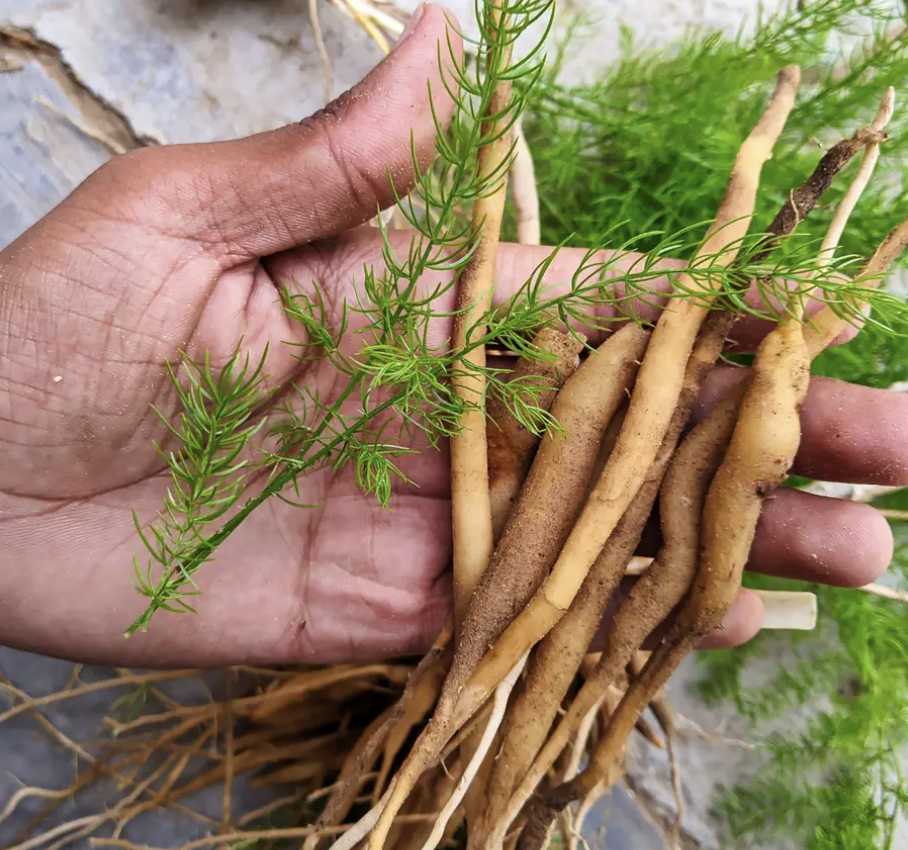
And perhaps that’s part of why I’ve found myself revisiting herbs traditionally associated with women’s health and hormonal transitions, particularly Shatavari, an Ayurvedic herb long used as a restorative tonic during periods of depletion and change.
What I appreciate about traditional herbal systems is that they tend to respect the body as a living system rather than a collection of isolated symptoms. They often focus on resilience, nourishment, recovery, and adaptability, ideas that feel deeply aligned with Pilates to me.
Because at its best, Pilates is not about overpowering the body. It is about supporting it intelligently through different seasons and different demands.
Sometimes that means building strength.
Sometimes it means improving recovery.
Sometimes it simply means creating an environment where the nervous system can exhale a little.
I think many women in perimenopause are searching for exactly that.
Not necessarily to feel younger.
Not necessarily to “optimize.”
Just to feel more like themselves again.
Lately, I’ve been enjoying a warm evening drink with powdered Shatavari, particularly during stretches of long teaching days, travel, or periods where my system feels overstimulated.
Simple. Grounding. Restorative.
I usually mix:
Warm Milk Or Almond Milk
1/2 Tsp Shatavari Powder
Cinnamon
Fresh Ginger
Optional Honey
The flavor is mild and earthy, especially comforting in colder months or at the end of a long day.
Where To Find It
I generally recommend:
Reputable Ayurvedic Companies
Organic Sources
Simple Ingredient Lists
Third-Party Tested Products When Possible
Organic India and Banyan Botanicals are common starting points for traditional Ayurvedic herbs and preparations.
When Shatavari May Not Be Appropriate
As with any herb, “natural” does not automatically mean universally safe.
Shatavari may not be appropriate for individuals who:
Are Pregnant Or Breastfeeding Without Medical Guidance
Have Hormone-Sensitive Conditions
Have Significant Estrogen-Related Concerns
Take Certain Diuretics Or Medications Affecting Fluid Balance
Have Allergies To Asparagus Family Plants
As always, this is educational information, not medical advice, and individualized guidance matters.
The more years I spend inside movement, rehabilitation, and nutrition, the more convinced I become that the body responds best to support rather than force.
Not extremes.
Not endless intensity.
Systems.
And perhaps that’s why Pilates remains so relevant during periods of transition. It reminds us that change itself does not have to be abrupt to be powerful.
~Alycea Ungaro
Founder, Real Pilates®